Zentec Motor
Choosing the right Precision Gear Motor in 2026 requires more than comparing catalog numbers. Global buyers must connect motor torque, reduction ratio, backlash, efficiency, noise, thermal limits, and installation space. A compact planetary gear motor may suit robotic joints, while a cycloidal design can handle shock loads in industrial equipment. Harmonic drives offer exceptional positioning accuracy, yet their cost and limited overload tolerance deserve careful review.
As MIT precision-engineering expert Alexander Slocum puts it, “Precision is not a number; it is a relationship between the function and the measurement.” That principle matters when evaluating suppliers across different regions. A motor rated for laboratory conditions may perform differently beside a hot machine, under continuous duty, or in a dusty production line. Real testing matters.
Numbers can mislead.
This guide compares the leading Precision Gear Motor types for global buyers in 2026. It considers application fit, service life, control compatibility, sourcing stability, and total ownership cost. It also examines practical details, such as mounting alignment, encoder feedback, grease selection, and replacement access. No design wins everywhere. That is the uncomfortable part. Buyers sometimes prioritize maximum precision and overlook efficiency, delivery risk, or repair complexity. A better decision begins with the actual motion profile, not the most impressive specification sheet.
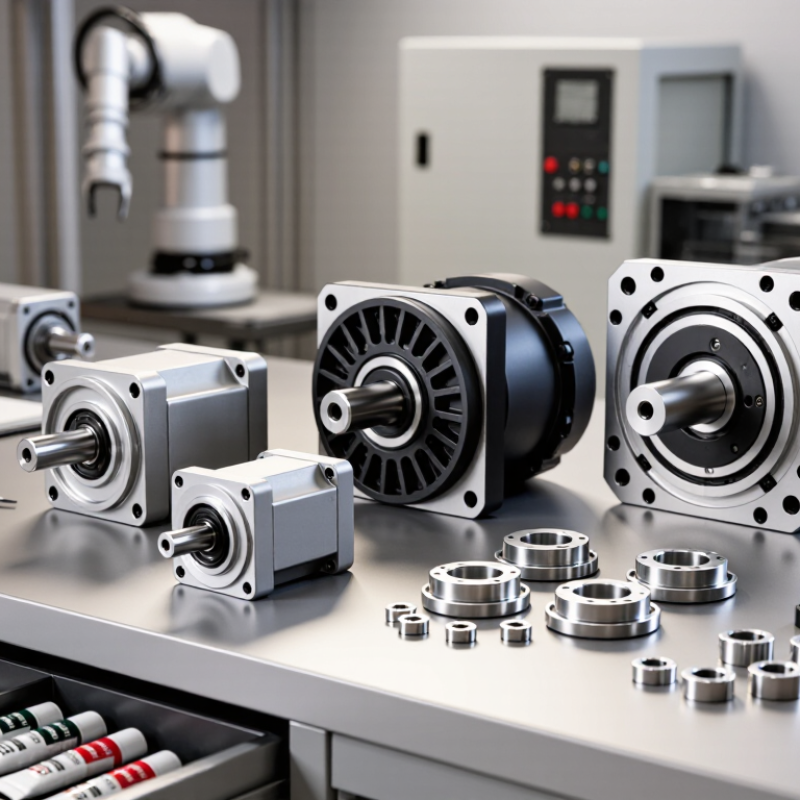
A precision gear motor combines an electric motor with a gearbox for controlled rotary motion. It produces lower speed, higher torque, and repeatable positioning. The motor creates rotation through electromagnetic force. Gear teeth then transfer this motion through selected ratios.
The gearbox determines how the motor behaves under load. Planetary gears share force across several contact points, improving stiffness and torque capacity. Spur gears are simpler and often cost less, but they can create more noise. Harmonic systems offer very low backlash, which suits robotic joints and optical equipment. No gearbox is perfectly silent or lossless.
A feedback sensor can measure shaft position, speed, or torque. The controller compares that information with the target command. It then adjusts motor current to correct movement. A practical selection should examine rated torque, peak torque, backlash, efficiency, duty cycle, voltage, and mounting dimensions. A motor may meet the torque figure yet overheat during repeated starts. That detail is often missed. Buyers should also check shaft loads, ambient temperature, sealing, and connector protection. Testing at the actual load is more dependable than trusting a catalogue value alone. Even experienced engineers sometimes choose excessive precision, adding cost without improving the final machine.
Precision gear motor selection in 2026 depends on motion accuracy, load behavior, and regional operating conditions.
Planetary gear motors suit compact machines requiring high torque and low backlash. Their rigid construction supports robotics, packaging equipment, and automated inspection systems.
Harmonic gear motors provide excellent positioning accuracy and very low backlash. They are useful in robotic joints and lightweight medical devices. However, their flexible components may require careful overload control.
Cycloidal gear motors handle shock loads better than many compact alternatives. Their rolling contact design supports conveyors, rotary tables, and industrial positioning units.
Spur and helical gear motors remain practical for moderate precision and lower budgets. Helical designs usually operate more quietly, but their efficiency depends on correct lubrication and alignment.
Right-angle bevel gear motors help equipment designers save installation space. Worm gear motors offer high reduction ratios, although heat buildup can reduce efficiency during continuous operation.
Global buyers should compare rated torque, allowable radial load, encoder resolution, backlash, duty cycle, and thermal performance. Check voltage ranges and certification documents for the destination market.
A motor tested at room temperature may behave differently inside a sealed cabinet at 45°C. In my experience, catalog accuracy figures need independent verification.
Some suppliers provide excellent data, while others leave duty-cycle limits unclear. Request test curves, dimensional drawings, noise values, and sample inspection reports before approving production. Small details matter, such as connector orientation and replacement-part availability.
Choosing a precision gear motor starts with the load, not the catalog headline. Torque must be checked at the output shaft, under continuous and peak conditions. Add acceleration torque, friction, and a realistic service factor. A motor rated at 10 N·m may struggle if the application repeatedly reverses direction.
Speed comparison also needs operating context. A high gear ratio increases output torque but reduces speed and may lower efficiency. IEC 60034 efficiency classifications help compare motor performance, yet they do not describe gearbox losses. The International Energy Agency reports that electric motors consume nearly half of global electricity, making efficiency relevant even in small machines. Measure speed under load, not only at no-load conditions. That difference can be surprisingly large.
Accuracy depends on more than the encoder resolution. Backlash, torsional stiffness, bearing clearance, and thermal drift can dominate the final position error. ISO 230 testing principles provide a useful framework for evaluating machine-tool positioning performance. Meanwhile, the International Federation of Robotics reported 541,302 industrial robot installations in 2023, showing why repeatable motion remains commercially important. In practice, I compare ratio, rated torque, peak torque, backlash, and temperature rise in one table. It is imperfect. A clean table can still hide poor duty-cycle assumptions. Test the motor with the real load, cable routing, and stopping pattern before approving the design.
2026 Best Precision Gear Motor Types for Global Buyers
Choosing Materials, Motors, Controllers, and Protection Ratings
Precision gear motors perform best when every component matches the working environment. Material selection should begin with load, temperature, vibration, and exposure risks. Hardened steel gears suit repeated torque demands, while corrosion-resistant housings help in humid or washdown areas. Plastics can reduce weight and noise, but their strength may decline under heat. That matters.
Motor choice depends on speed stability, starting torque, duty cycle, and available power. Brushless motors often support efficient continuous operation, while brushed designs may fit simpler, lower-cost equipment. Stepper motors provide controlled positioning, but they can lose torque at higher speeds. Servo systems offer feedback and accuracy, though they require more careful tuning. Keep it practical. Oversizing every motor increases cost and may reduce control quality.
The controller must match voltage, current, feedback signals, braking needs, and communication requirements. A motor may appear suitable until the controller struggles with acceleration or heat. Protection ratings also deserve close attention. An IP65 enclosure can resist dust and water jets, while IP67 adds temporary immersion protection under defined test conditions. Ratings do not replace proper cable glands, seals, or installation practice. One assumption deserves reconsideration: higher protection is not automatically better. Sealed housings may trap heat, shortening service life. Measure real temperatures during peak operation, then review the selection before production.
| Gear Motor Type | Typical Reduction Ratio | Typical Efficiency | Recommended Gear Materials | Compatible Motor Options | Controller and Feedback Options | Typical Protection Rating | Best-Fit Applications | Key Selection Considerations |
|---|---|---|---|---|---|---|---|---|
| Planetary Gear Motor | 3:1 to 100:1 per stage; higher ratios with multiple stages | Approximately 85%–95%, depending on ratio and stages | Hardened alloy steel gears Steel ring gear Aluminum housing | Brushed DC Brushless DC Servo Stepper | H-bridge, brushless drive, servo drive, or stepper drive; encoder or resolver feedback for closed-loop positioning | IP40–IP65; higher ratings require sealed construction and suitable cable glands | Robotics, AGVs, medical equipment, packaging, machine tools, and precision conveyors | Strong choice when high torque density, low backlash, and compact size are required. Confirm rated torque, peak torque, backlash, and bearing loads. |
| Helical Gear Motor | 3:1 to 200:1, commonly using one or more stages | Approximately 90%–97% | Case-hardened steel Ground helical teeth Cast iron or aluminum housing | Three-phase AC motor Brushless DC Servo motor | Variable-frequency drive, servo drive, or brushless motor controller; optional incremental or absolute encoder | IP54–IP66 for industrial enclosed versions | Industrial automation, material handling, mixers, conveyors, and continuous-duty machinery | Provides smooth and relatively quiet operation. Check duty cycle, thermal capacity, mounting orientation, lubrication, and service factor. |
| Spur Gear Motor | 2:1 to 100:1, generally in multiple stages for high ratios | Approximately 75%–92% | Sintered steel Machined steel Engineering polymers for low loads | Brushed DC Brushless DC Stepper | PWM speed controller, H-bridge, brushless controller, or stepper driver; Hall sensors or encoder when speed regulation is needed | IP20–IP54; sealed versions may reach IP65 | Small actuators, office equipment, laboratory instruments, valves, and low-to-medium load mechanisms | Cost-effective and compact, but usually noisier and less efficient than helical or planetary designs. Avoid excessive shock loads and radial overloading. |
| Worm Gear Motor | 5:1 to 100:1 in a single stage | Approximately 40%–90%, depending strongly on ratio, lead angle, and lubrication | Hardened steel worm Bronze worm wheel Aluminum or cast iron housing | AC induction Brushed DC Brushless DC | AC variable-frequency drive, DC PWM controller, or brushless drive; brake or encoder may be added for controlled stopping | IP44–IP66, depending on enclosure and shaft sealing | Gates, lifts, indexing systems, conveyors, rotary tables, and applications needing high reduction in a compact layout | Can provide self-locking behavior in some configurations, but self-locking must never be assumed without testing. Consider heat generation, back-driving, lubrication, and efficiency. |
| Bevel Gear Motor | 2:1 to 200:1, using single or multiple stages | Approximately 85%–96% | Hardened steel bevel gears Ground tooth surfaces Cast iron or aluminum housing | Three-phase AC motor Brushless DC Servo motor | Variable-frequency drive, servo drive, or brushless controller; encoder feedback for synchronized motion | IP54–IP66 for industrial designs | Right-angle conveyors, packaging machines, robotics, mixers, and equipment with restricted installation space | Useful for transferring torque through a 90-degree direction change. Verify output shaft orientation, overhung load, noise, lubrication, and mounting position. |
| Harmonic or Strain-Wave Gear Motor | 30:1 to 320:1 in a single compact stage | Approximately 70%–90% | Precision alloy steel Flexible cup element High-strength circular spline | AC servo Brushless servo Torque motor | Closed-loop servo drive with high-resolution encoder; absolute feedback is preferred for position-critical axes | IP40–IP65; sealing depends on the integrated motor and output assembly | Robot joints, semiconductor equipment, optical systems, medical positioning, and precision rotary axes | Offers very low backlash and high positional accuracy. Confirm rated torque, peak torque, torsional stiffness, bearing capacity, and allowable output speed. |
| Cycloidal Gear Motor | 6:1 to 119:1 in a single stage; higher ratios with additional stages | Approximately 80%–95% | Hardened steel cam Alloy steel discs High-strength roller pins | Servo motor AC induction Brushless DC | Servo drive, variable-frequency drive, or brushless controller; encoder feedback for precision motion | IP54–IP65 in enclosed industrial configurations | Robotics, heavy-duty positioning, indexing tables, conveyors, and shock-load applications | Handles shock loads well and provides high torque density. Evaluate torsional stiffness, backlash under load, lubrication, vibration, and output bearing capacity. |
| Direct-Drive Torque Motor with Precision Gear Stage | Usually 1:1 to 10:1 when a low-ratio precision stage is added | Approximately 80%–95%, depending on gear-stage ratio | Ground alloy steel Preloaded bearings Low-expansion structural housing | Permanent-magnet synchronous motor Brushless torque motor | High-bandwidth servo drive with current, velocity, and position loops; high-resolution optical, magnetic, or inductive encoder | IP40–IP67, depending on motor integration and environmental sealing | Rotary indexing, precision inspection, semiconductor handling, telescope mechanisms, and high-accuracy automation | Selected for smooth low-speed torque and low transmission error. Confirm continuous torque, peak torque, thermal dissipation, encoder accuracy, and resonance behavior. |
| Buyer reference: Values are typical engineering ranges rather than universal specifications. Final selection should be based on continuous and peak torque, output speed, duty cycle, backlash, radial and axial loads, ambient temperature, noise limits, control interface, certification requirements, and the complete assembled system's tested IP rating. | ||||||||
2026 Best Precision Gear Motor Types for Global Buyers
Global buyers should match gear motor design with load behavior, not catalog popularity. Planetary gear motors suit high torque density and controlled backlash. Helical types offer smooth transmission and efficient continuous operation. Spur gear motors remain practical for compact, cost-sensitive mechanisms. Worm gear motors provide high reduction ratios, but their heat and lower efficiency need careful review. Bevel gear motors help transfer power through right-angle layouts.
Application details shape the choice. A conveyor may need steady torque, low noise, and long duty cycles. A robotic actuator may require repeatable positioning, low backlash, and a suitable encoder. Packaging equipment often needs fast acceleration and frequent starts. Measure peak torque, rated torque, output speed, duty cycle, shaft load, and allowable backlash. Small errors matter.
Global sourcing also requires consistent documentation. Request dimensional drawings, tolerance data, motor curves, inspection records, and sample test results. Check compatibility with local voltage, frequency, connectors, and safety requirements. IP ratings should match dust, moisture, and cleaning conditions. Materials and restricted-substance declarations may support market access, but buyers must verify current regional rules independently. A supplier’s ISO-certified process can improve reliability, yet certification alone cannot prove product performance.
In practical sourcing reviews, quoted torque sometimes hides thermal limits. Ask for test conditions. Ask again.
A useful weakness remains uncertainty during early selection. Real loads can differ from laboratory data. Prototype testing under actual temperature, vibration, and duty conditions is still necessary. This step costs time, but it often prevents expensive redesigns and inconsistent field performance.
Representative no-load backlash values help compare motion-control precision. Lower backlash generally supports better positioning accuracy, while the final choice also depends on torque, speed, duty cycle, efficiency, noise, protection rating, and regional compliance requirements.
Reference values are typical engineering ranges converted to arcminutes; actual performance varies by gear ratio, load, manufacturing tolerance, lubrication, and operating conditions.
It combines an electric motor with a gearbox. The motor creates rotation, while gears reduce speed and increase output torque. It supports controlled, repeatable movement.
Gear ratios determine output speed and torque. Higher ratios usually provide more torque but reduce speed and efficiency. No gearbox is completely silent or lossless.
Planetary gears support high torque and stiffness through several contact points. Spur gears cost less but may produce more noise. Harmonic systems provide very low backlash for robotic joints and optical equipment.
Sensors can measure position, speed, or torque. A controller compares measurements with the target command and adjusts motor current. Without feedback, positioning may drift under changing loads.
Check torque at the output shaft under continuous and peak conditions. Include acceleration, friction, reversals, and a realistic service factor. A motor rated for 10 N·m may struggle during repeated direction changes.
Not by itself. Backlash, shaft stiffness, bearing clearance, and thermal drift can create larger errors. Test the complete assembly, not only the sensor.
Hardened steel gears suit repeated torque demands. Corrosion-resistant housings help in humid or washdown environments. Brushless motors suit continuous operation, while stepper motors may lose torque at higher speeds.
An IP65 enclosure resists dust and water jets. An IP67 enclosure also supports temporary immersion under defined test conditions. Higher protection is not always better. Sealed housings can trap heat.
Test the motor with its real load, cable routing, stopping pattern, and operating temperature. Measure speed under load, not only without load. A catalogue value can mislead.
Yes. Extra precision can increase cost without improving the finished machine. My comparison table may still hide weak duty-cycle assumptions. Review the actual error requirement.
This guide explains what a Precision Gear Motor is and how its motor, gearbox, and control system work together to deliver reliable motion. It reviews the main types available to global buyers in 2026, including planetary, worm, spur, helical, and harmonic gear motor designs, highlighting their typical strengths, limitations, and suitable operating environments. Readers will learn how to compare torque, speed, positioning accuracy, efficiency, noise, service life, and gear ratios according to specific equipment requirements.
The article also examines the selection of materials, motor technologies, controllers, feedback systems, and protection ratings for different working conditions. It outlines practical sourcing considerations, such as quality consistency, documentation, testing, customization capability, communication, and compliance with applicable international standards. Covering automation, robotics, medical equipment, packaging, laboratory systems, and other precision applications, this overview helps buyers develop clear specifications and choose a Precision Gear Motor that balances performance, durability, integration needs, and total cost.