Zentec Motor
When sourcing motors for various applications, one crucial component often stands out: the Motor with Encoder. This technology has gained prominence due to its ability to provide precise control over speed and position. In industries ranging from manufacturing to robotics, these motors enhance operational efficiency significantly. Their integration allows for improved product quality and reduced waste, making them a valuable asset in today’s competitive market.
Choosing the right Motor with Encoder can be challenging. Numerous options exist, and each application has unique requirements. It is vital to assess the specifications crucial for performance, such as resolution and feedback accuracy. Many suppliers offer a range of products, but discerning reliable manufacturers is essential. The presence of industry certifications can indicate quality and reliability.
Exploring the landscape of Motor with Encoder options reveals gaps in some suppliers' offerings. Not all products meet stringent performance standards. It's beneficial to consult industry experts and compare multiple sources before making a selection. Making informed decisions can significantly impact operational success, underscoring the importance of thorough research.
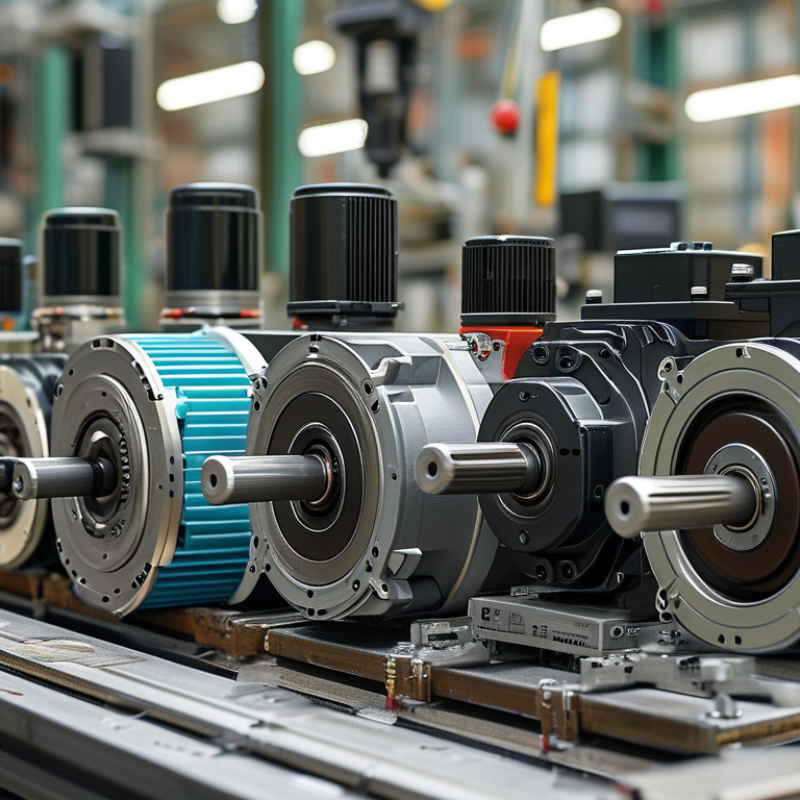
In the realm of global sourcing, the demand for motors with encoders is on the rise. Various motor types equipped with encoders cater to different industrial needs. According to a recent industry report, the servo motor segment has taken a lead, commanding over 40% of the market share. This dominance is largely due to their precision and real-time feedback capabilities, making them ideal for automation applications.
Stepper motors also play a significant role in this landscape. They are favored for their simplicity and cost-effectiveness. The stepper motor market is projected to grow by 10% annually, driven by increasing demand in 3D printing and medical devices. However, their performance can lag in high-speed applications. Understanding the differences is crucial for organizations.
Brushless DC motors, known for their efficiency, are increasingly adopted due to their long lifespan and low maintenance needs. Reports indicate a shift towards these motors due to rising energy costs. Yet, their initial investment is higher, which can be a hurdle for some companies. Each motor type presents unique advantages and challenges, impacting sourcing decisions in distinct ways.
When selecting motors with encoders for global sourcing, several key features merit careful consideration. First, the resolution of the encoder is crucial. Higher resolution allows for finer control and precision in applications, particularly in robotics and automation. It’s beneficial to assess the application requirements and choose an encoder that meets the specific precision needs.
Additionally, consider the type of feedback mechanism employed. Incremental and absolute encoders serve different purposes. Incremental encoders count pulses, while absolute encoders provide a unique position value, even after a power loss. Understanding the advantage of each can lead to better application performance.
Another aspect to ponder is the motor’s compatibility with the encoder. Not all motors work seamlessly with every encoder type. Ensuring proper integration can prevent performance issues. Consider the environmental factors affecting both systems. Dust, moisture, and temperature can impact performance and durability. Reflecting on these factors before making a choice can save time and resources in the long run.
As global industries shift towards automation, the demand for high-quality encoders grows. Encoders play a pivotal role in precision motion control applications. Selecting the right motor with encoder is crucial for achieving optimal performance. According to a recent industry report, the encoder market is projected to reach USD 2.5 billion by 2026, reflecting a compound annual growth rate of 6.3%.
Top brands in 2026 emphasize innovation and reliability. Many manufacturers focus on integrating advanced technologies. This helps enhance sensitivity and accuracy while reducing costs. Notably, suppliers are incorporating features like dustproof and waterproof designs. Such developments are essential for applications in harsh environments, like manufacturing and robotics.
**Tips:** Ensure to evaluate the specifications thoroughly. Look for encoders with a proven track record in your industry. Prioritize manufacturers who offer robust customer support. Balancing cost with performance is essential, but don’t sacrifice quality for a lower price. An incorrect choice can lead to inefficiencies and increased maintenance costs.
This chart illustrates the performance metrics of various motors equipped with encoders in 2026, focusing on their accuracy, response time, and efficiency ratings.
Encoders play a vital role in numerous industries, contributing to precise motor control. They are integral to robotics, manufacturing, and automotive sectors. These devices enhance the functionality of motors by providing accurate position feedback. This feedback allows for smoother operations and better accuracy in tasks such as assembly and packaging.
In the automotive industry, encoders assist in applications like electric steering and automatic parking. Their ability to track rotation and position ensures safety and reliability. In manufacturing, encoders help in CNC machines, improving precision in cutting and shaping materials. This capability is crucial for quality control.
Tip: When selecting a motor with an encoder for your application, consider the environment. Dusty or wet conditions may require specific encoders designed for protection.
Encoders also find their place in robotics. They enable robots to navigate and perform tasks with remarkable precision. However, integrating these systems can present challenges. Calibration issues may arise, leading to performance discrepancies. Regular maintenance is essential to avoid these pitfalls.
Tip: Regularly test your motor and encoder setup to identify any deviations. Early detection can save time and resources in the long run.
As we look toward 2026, the integration of motors and encoders is evolving rapidly. These technologies are becoming more advanced, efficient, and responsive to global sourcing needs. Industries rely on precise motor control for automation. Future motors will likely include smart features, such as IoT connectivity. This will enable real-time monitoring and data analysis, enhancing performance.
The demand for energy efficiency is paramount. Motors with integrated encoders can optimize energy use, decreasing operational costs. Moreover, the trend toward miniaturization means smaller, more powerful motors will emerge. This creates room for innovation in various applications, from robotics to consumer electronics. Yet, challenges persist in standardization and compatibility across different systems.
As sectors adapt to new technologies, understanding market trends becomes critical. Companies must stay informed about advancements in motor and encoder designs. Embracing these changes is essential for maintaining competitiveness. It’s important to reflect on how companies can improve their practices and invest in R&D. In the end, the path forward will require a blend of creativity and technical insight.
: Encoder resolution is essential for precision in applications like robotics and automation. Higher resolution means better control.
Incremental encoders count pulses, while absolute encoders provide a unique position even after power loss. Choose based on your needs.
Not all motors work well with every encoder. Proper integration avoids performance issues and ensures optimal operation.
Dust, moisture, and temperature can affect performance. Select encoders designed for protective measures against these factors.
Encoders are vital in robotics, manufacturing, and automotive sectors, providing precise feedback for smoother operations.
Encoders assist in applications like electric steering and parking, ensuring accuracy and safety in vehicle operations.
Innovations include IoT integration and energy-efficient designs. Smaller motors may emerge, creating new opportunities across industries.
Regular testing of motor and encoder systems helps identify deviations. Early detection can prevent bigger issues later on.
Calibration issues can lead to performance discrepancies. Reflect on the importance of regular maintenance and checks.
Companies need to stay informed about advancements and invest in R&D. Creativity and technical insight will be crucial for success.
In the quest for optimal performance in global sourcing, understanding the various types of motors with encoders is essential. These motors are equipped with feedback systems that enhance control and precision in applications ranging from robotics to manufacturing. When selecting a motor with encoder, key features such as resolution, response time, and compatibility with existing systems must be carefully evaluated to meet specific operational needs.
As industries increasingly adopt automation, the demand for motors with encoders is rising, fostering innovation in design and functionality. Emerging trends indicate a shift towards more compact, energy-efficient models that integrate advanced sensing technologies. This evolution not only caters to diverse applications but also positions motors with encoders as critical components in the future landscape of global markets.
