Zentec Motor
Choosing the right Planetary Gear Motor starts with the machine’s actual workload, not a catalog headline. A conveyor may need steady torque at low speed, while a compact packaging axis may demand frequent starts and precise positioning. The same motor can perform well in one setup and overheat in another. Small details matter.
The International Energy Agency’s 2011 report, Energy-Efficiency Policy Opportunities for Electric Motor-Driven Systems, estimates that these systems use about 45% of global electricity. That figure puts efficiency in perspective, but it does not identify the best gearbox for any single machine. Selection still depends on measurable conditions: required output torque and speed, duty cycle, load inertia, mounting space, ambient temperature, and permissible backlash. A rough estimate can lead to a noisy, hot drive. Or a costly oversized one.
This guide turns those requirements into practical checks. It explains how to compare gear ratios, motor types, efficiency, thermal limits, and service factors, then match them to real operating conditions. For a credible choice, use the manufacturer’s torque curves and thermal ratings, and verify assumptions against the application. A datasheet is useful. It is not the whole story. Engineers should also consider shock loads, lubrication, installation alignment, and maintenance access. Some applications need unusually low backlash; others benefit more from durability and cost control. There is no universal winner, and that is worth remembering.
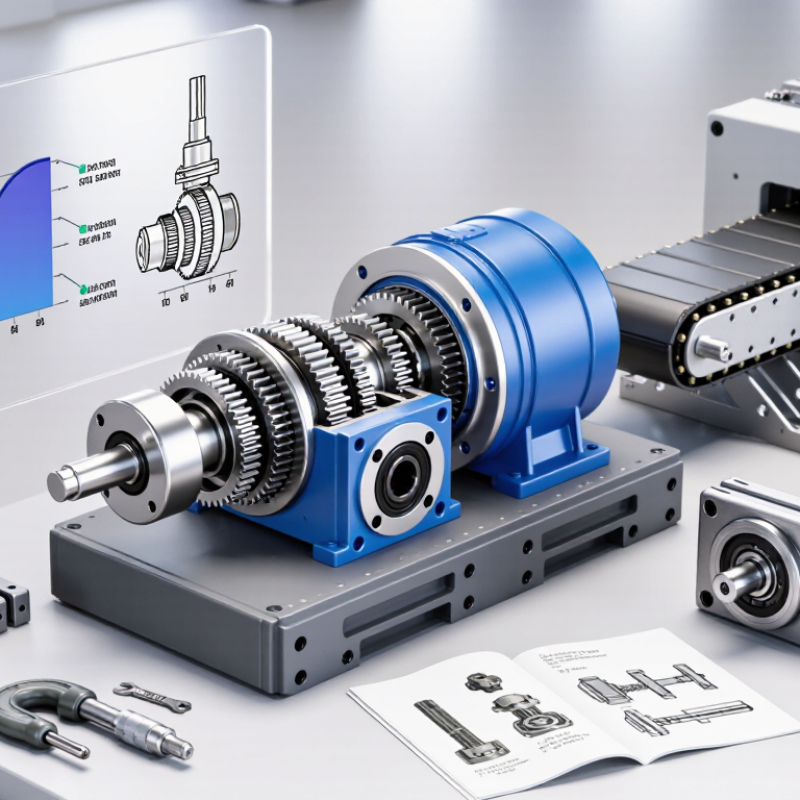
A planetary gear motor combines an electric motor with a compact gear train. The motor turns a central sun gear, which drives several planet gears. These mesh with an outer ring gear. With the ring fixed, the planets rotate around the sun and carry the output shaft. The arrangement shares load across multiple teeth, helping deliver higher torque in a small package.
That matters. The gear ratio trades speed for torque: a slower output can turn a heavier load. The U.S. Department of Energy’s Improving Motor and Drive System Performance sourcebook reports that motor systems use about 69% of electricity in U.S. manufacturing. That figure covers many motor systems, not planetary gear motors alone, but it shows why matching motor and load matters.
When assessing a unit, check the required output speed, continuous torque, starting load, and duty cycle. A conveyor may need steady torque; a positioning axis may need low backlash. More reduction stages can increase torque, but may also add losses, heat, and complexity. Watch the housing temperature during a realistic test. I would not choose by ratio alone; real load patterns are often messier than a neat specification sheet suggests.
Choosing the right planetary gear motor starts with a clear picture of the job. Estimate the load at the output shaft, including the weight, friction, and any force needed to start moving. Then identify the required output speed and torque. A conveyor that starts under a full load needs more starting torque than one that runs steadily. Note how often it starts, stops, or reverses. These details can change the motor size.
Tips: Measure the real operating load, not just the ideal value. Check peak torque during startup and allow for shock loads. Keep a little margin. Too much margin, though, can mean a larger, costlier motor than the application needs.
Use the speed and torque targets together when selecting a gear ratio; changing the ratio affects both. Check the motor’s performance data at the actual operating point, along with duty cycle and thermal limits. A unit may meet the torque target briefly but overheat during continuous operation. If the load varies, record its heaviest and typical conditions. The first estimate may be imperfect. Recheck it against measurements from the machine, especially if friction or load changes with temperature.
Define the load, speed, and torque requirements before selecting a gear motor.
The examples show plausible output requirements: torque is measured in newton-metres (Nm), and speed in revolutions per minute (rpm). Treat them as starting points, not universal specifications. Calculate requirements for the actual load, including startup torque, inertia, friction, and duty cycle, then check the motor’s continuous and peak ratings.
Choose the gear ratio from the required output speed and load, rather than from the motor’s advertised speed alone. For example, a 3,000-rpm motor paired with a 10:1 reduction produces roughly 300 rpm before losses. A higher ratio can increase output torque, but it also reduces speed and may add backlash. Measure the real load. Include starting friction, brief overloads, and how often the motor must stop and restart.
Estimate torque with the gearbox’s efficiency in mind; theoretical torque multiplication is never fully available at the output shaft. Check the motor’s continuous torque and duty cycle, not just its stall rating. Allow margin. A common design mistake is choosing a ratio that meets the steady-state target but struggles when a conveyor starts with a full bin. I would verify that condition with a real load if possible.
Then match the motor type to the control task. Brushed DC motors are straightforward for basic speed control, while brushless DC motors suit longer operating life and frequent use. Steppers can provide useful low-speed positioning, but may lose steps under unexpected loads. For accurate positioning across changing loads, a servo may be a better fit. Also check the available voltage, controller, heat buildup, and mounting space; a compact motor can still run hot in a sealed housing.
Choosing a planetary gear motor starts with the load, not the catalog’s highest efficiency figure. Separate motor efficiency from gearbox efficiency: together, they determine how much electrical input becomes useful shaft power. The U.S. Department of Energy’s 2014 Improving Motor and Drive System Performance sourcebook estimates that motor-driven systems account for about 68% of U.S. manufacturing electricity use. That figure covers many applications, not planetary gear motors alone, but it shows why realistic system-level comparison matters. Measure input power, output speed, and torque under the expected load. No-load tests can mislead.
Size the unit for continuous torque and short acceleration peaks. A conveyor lifting cartons, for example, may need extra torque when starting fully loaded. Check reflected inertia, permitted radial and axial shaft loads, backlash, and mounting space—not just the motor’s rated power. Compact housing can help in a tight machine. It does not guarantee adequate cooling or bearing life. There is no perfect pick.
Operating conditions can change the result. Compare duty cycle, ambient temperature, shock loads, dust exposure, and lubrication requirements with the supplier’s documented limits. A motor running intermittently in a clean room faces different demands from one cycling all day beside abrasive dust. Ask for efficiency data at your actual speed and load points, plus thermal limits for the intended duty. Still, I would not trust a tidy spreadsheet alone. Verify the choice in a representative test; real startup behavior can be stubborn.
A planetary gear motor should match the machine, not just the target torque. Check the required speed, continuous load, peak load, duty cycle, and available supply voltage. Compare the motor’s rated output with the gearbox’s allowable torque and thermal limits. A brief startup surge can exceed a rating that looks adequate on paper. Numbers matter.
Next, verify that the mounting face, bolt pattern, pilot diameter, and shaft dimensions fit the driven equipment. Check shaft direction and clearance around couplings, guards, and nearby cables. A few millimeters can turn a clean installation into a misalignment problem. Use the actual assembly drawing, not a remembered measurement; memory is often optimistic. Measure twice.
Service needs deserve equal attention. Ask whether the unit is sealed, what lubrication it uses, and whether seals or bearings can be serviced. Follow the supplier’s maintenance instructions, since lubrication intervals vary with load, speed, temperature, and orientation. Also consider access: a motor buried behind a frame may take hours to inspect. It is tempting to choose the smallest, cheapest option, but that choice may complicate replacement later. Leave room for tools and inspection.
Measure output load, friction, required speed, and starting torque. Include the heaviest load, such as a full conveyor bin. Estimates can be wrong.
A conveyor may need more torque to start than to run steadily. Record stops, starts, reversals, and brief overloads. Test the difficult case.
A 3,000-rpm motor with a 10:1 reduction produces roughly 300 rpm before losses. Higher ratios can increase output torque while reducing speed.
No. Check continuous torque, duty cycle, and thermal limits. A motor might meet a brief peak but overheat during continuous operation.
Brushed DC motors offer straightforward speed control. Brushless DC motors suit frequent use. Steppers support low-speed positioning but may lose steps under unexpected loads.
A servo may suit accurate positioning across changing loads. Check controller compatibility, voltage, mounting space, and heat buildup in enclosed equipment.
Compare motor and gearbox efficiency together. Ask for data at your expected speed and load. No-load figures can mislead.
Consider ambient temperature, dust, shock loads, lubrication, and shaft forces. A sealed housing may restrict cooling. Verify the selection with a representative test.
Choosing the right Planetary Gear Motor begins with understanding how its compact gear arrangement transfers motor power through multiple meshing gears to deliver controlled speed and torque. Start by defining the load, required output speed, and torque, including any starting or peak demands. These figures help narrow the motor size and prevent selecting a unit that is either insufficient for the task or unnecessarily large.
Next, choose a gear ratio and motor type that meet the required output while considering efficiency, available space, and operating conditions such as duty cycle, temperature, and surrounding environment. Check that the motor’s mounting arrangement, shaft dimensions, and electrical requirements match the equipment. Finally, consider maintenance access, expected service life, and replacement needs. Comparing these factors together helps ensure the selected motor performs reliably and fits the application over time.