Zentec Motor
Choosing the right Speed Control Motor is an engineering decision, not a catalog exercise. The motor must match the load, operating cycle, environment, and control method. A conveyor moving steadily needs different behavior from a pump facing changing pressure. The details matter.
The International Energy Agency reports that electric motor systems consume roughly 40% of global electricity. The U.S. Department of Energy also identifies motor-driven equipment as a major industrial energy user. These figures explain why a small efficiency mistake can become a large operating cost. A motor that runs hot, hunts at low speed, or starts too aggressively may reduce production quality. It may also shorten bearing and insulation life.
Bimal K. Bose, a leading power-electronics authority, described the field clearly: “Power electronics is the technology of solid-state electronics for the control and conversion of electric power.” His point remains practical. The controller is not an accessory. It shapes torque, speed, braking, and energy use.
A sound selection process begins with four questions. What speed range is required? What torque does the load demand? How often does the motor start, stop, or reverse? What protection does the site require?
Do not trust horsepower alone.
Variable-frequency drives, servo systems, and geared motors each solve different problems. Yet the cheapest package may not be the most reliable one. This guide compares those choices through measurable criteria, including efficiency, controllability, duty cycle, noise, maintenance, and total cost. Some installations still need deeper testing. That is an honest limitation. Real loads rarely behave like neat spreadsheet curves.
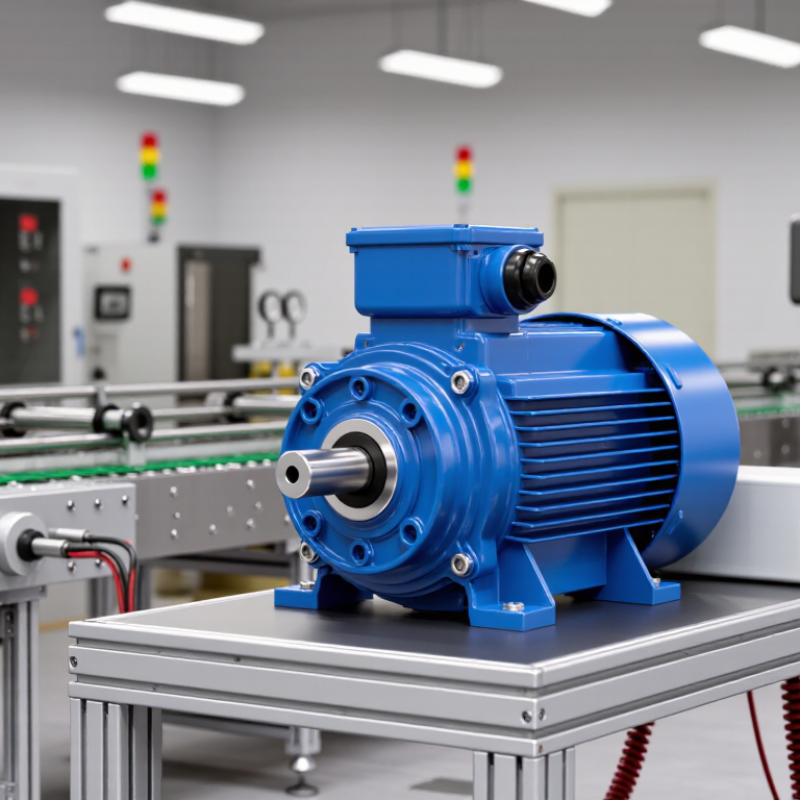
How to Choose the Right Speed Control Motor?
Choosing a speed control motor begins with understanding how it changes speed. An AC induction motor usually uses a variable-frequency drive. The drive adjusts frequency and voltage, allowing smooth speed changes and controlled acceleration. It suits pumps, fans, conveyors, and other steady industrial loads.
A brushed DC motor changes speed mainly through voltage adjustment. It provides strong starting torque and simple control, but its brushes wear over time. A brushless DC motor uses electronic switching instead. It offers quieter operation, longer service life, and efficient speed regulation. Servo motors add position feedback, making them useful when speed and stopping accuracy both matter. They cost more, though.
Match the motor to the load, not only the required speed. A conveyor carrying heavy boxes needs starting torque. A small fan needs stable rotation and low noise. Check the motor’s rated speed, torque curve, duty cycle, and thermal limits. Feedback from an encoder can correct speed changes caused by variable loads. Without feedback, the motor may slow unexpectedly.
A common selection mistake is focusing on maximum speed. That figure can hide poor low-speed torque. Test the motor under realistic conditions. Measure heat, vibration, and stopping response. The first choice may be wrong. Recheck the load inertia and control method before final installation. A clean enclosure and proper wiring also improve reliability.
| Motor Type | Operating Principle | Typical Speed-Control Method | Typical Speed Range | Main Advantages | Key Limitations | Common Applications |
|---|---|---|---|---|---|---|
| AC Induction Motor | A rotating magnetic field produced by the stator induces current in the rotor, creating torque. | Variable-frequency drive (VFD) changes supply frequency and voltage. | Approximately 10–100% of rated speed with suitable VFD control. | Rugged construction, low maintenance, good efficiency, and broad power availability. | Requires a drive for efficient variable-speed operation; low-speed cooling and torque may need attention. | Pumps, fans, conveyors, compressors, machine tools, and industrial equipment. |
| Permanent-Magnet AC Motor | Permanent magnets on the rotor interact with the stator’s rotating magnetic field to produce torque. | VFD or servo drive with electronically controlled commutation. | Approximately 5–100% of rated speed; wider ranges are possible with feedback and suitable control. | High efficiency, high power density, strong low-speed torque, and compact size. | Higher initial cost; magnets can be affected by excessive temperature or fault conditions. | Energy-efficient pumps, robotics, compressors, electric vehicles, and precision machinery. |
| Brushless DC Motor | Electronic switching replaces brushes and mechanically commutated current to maintain rotor movement. | Electronic controller using pulse-width modulation (PWM). | Typically 10–100% of rated speed, depending on controller and feedback method. | Quiet operation, low maintenance, high efficiency, and good dynamic response. | Needs an electronic controller; performance depends on correct commutation and thermal design. | Fans, pumps, appliances, laboratory equipment, automated systems, and battery-powered products. |
| Brushed DC Motor | Brushes and a commutator switch current through the armature windings to produce continuous torque. | Armature-voltage control or PWM. | Approximately 10–100% of rated speed; lower speeds may require feedback control. | Simple control, high starting torque, and economical drive electronics. | Brush and commutator wear, electrical noise, and more frequent maintenance than brushless designs. | Small actuators, vehicle accessories, toys, laboratory devices, and low-cost motion systems. |
| Stepper Motor | The controller energizes phase windings in sequence, moving the rotor through defined angular steps. | Pulse frequency controls speed; pulse count controls position. | Commonly 0–1,200 rpm, depending on load, motor design, and drive settings. | Accurate open-loop positioning, high holding torque, and simple motion control. | Torque decreases as speed rises; resonance, vibration, and missed steps may occur under overload. | 3D printers, scanners, indexing systems, packaging equipment, and light-duty positioning systems. |
| Servo Motor | A closed-loop controller compares commanded and actual position or speed and continuously corrects motor output. | Servo drive with encoder, resolver, or other feedback device. | Often 0–3,000 rpm; exact range depends on motor, drive, and application requirements. | High accuracy, rapid acceleration, excellent torque control, and reliable correction of load changes. | Higher system cost, greater setup complexity, and increased tuning requirements. | Robotics, CNC equipment, printing, semiconductor machinery, and high-speed automation. |
| Selection Factor | What to Check | Recommended Consideration |
|---|---|---|
| Required Speed | Minimum speed, maximum speed, speed range, and allowable speed variation. | Use an AC induction or permanent-magnet motor with a drive for broad industrial speed control; use a servo system when precise speed response is essential. |
| Torque Requirement | Starting torque, continuous torque, peak torque, and load changes during operation. | Select the motor based on the complete torque-speed curve, not only the rated power. |
| Control Accuracy | Position accuracy, speed regulation, acceleration time, and response to disturbances. | Choose closed-loop servo control for demanding positioning or highly stable speed requirements. |
| Power Supply | AC or DC source, voltage, frequency, phase configuration, and available current. | Match the motor and controller ratings to the available supply and confirm compatibility before installation. |
| Duty Cycle and Heating | Continuous or intermittent duty, overload duration, ambient temperature, and cooling conditions. | Allow thermal margin and verify cooling performance, especially during low-speed operation. |
| Environment | Dust, moisture, chemicals, vibration, noise limits, and hazardous-area requirements. | Select suitable enclosure protection, insulation, cooling, and certification for the installation environment. |
| Maintenance and Lifecycle Cost | Brush replacement, lubrication, controller cost, energy consumption, and service accessibility. | Compare total cost of ownership rather than purchase price alone; brushless and induction designs usually reduce routine maintenance. |
A variable-frequency drive adjusts frequency and voltage. This enables smooth acceleration and speed control. It suits pumps, fans, and conveyors.
A brushed motor changes speed through voltage adjustment. Its brushes wear over time. A brushless motor uses electronic switching and usually runs quieter.
Choose a servo motor when speed and stopping position both require accuracy. Position feedback improves correction. The higher cost needs justification.
Match torque, inertia, speed, and duty cycle. A conveyor carrying heavy boxes needs strong starting torque. A small fan needs quiet stability.
Maximum speed may hide weak low-speed torque. Test the motor under realistic resistance. Watch speed drops, vibration, heat, and stopping response.
Record weight, friction, acceleration time, operating position, and peak startup demand. Check sudden direction changes. These moments often determine motor size.
Note running time, stopping time, starts per hour, and ambient temperature. Continuous operation creates more heat. Short movements create different thermal demands.
Dust, moisture, heat, and chemical vapors can shorten service life. Check enclosure protection, insulation, cable glands, and terminal boxes carefully.
Include the motor, controller, installation, energy, spare parts, downtime, and disposal. A low purchase price can mislead. I underestimated adjustment costs once.
Temperature and vibration readings can reveal problems early. Sensors are not magic. Someone must review the data and act on it.
Choosing the right Speed Control Motor begins with understanding the available motor types and how their operating principles match your application. First, define the required load, torque, operating speed, acceleration, and duty cycle. These factors determine whether the motor can perform reliably under continuous, intermittent, or frequently changing conditions. It is also important to compare control methods based on speed accuracy, response time, stability, and ease of adjustment.
Motor sizing should consider power requirements, starting conditions, thermal capacity, and compatibility with the selected drive or controller. Beyond performance, evaluate energy efficiency, installation environment, noise, cooling, maintenance needs, and expected service life. A motor that appears less expensive initially may create higher operating or maintenance costs over time. By balancing technical requirements, control performance, environmental suitability, and total ownership cost, users can select a Speed Control Motor that delivers dependable operation, efficient energy use, and long-term value.