 Zentec Motor
Choosing a reliable China Heavy Duty Motor supplier requires more than comparing online prices. The right decision begins with the working environment. A motor running a stone crusher faces different demands from one driving a conveyor, crane, pump, or steel mill. Load cycles matter. So do voltage, frequency, ambient temperature, dust, moisture, braking, and starting current.
Professor Austin Hughes, author of Electric Motors and Drives, states, “The motor is only one part of the drive system.” This principle deserves attention. A capable supplier should discuss the complete application, not simply recommend a standard model. Ask for rated power, efficiency class, insulation grade, IP protection, bearing design, cooling method, and service factor. Request test reports, material records, dimensional drawings, and serial-number traceability. These details turn promises into evidence.
A factory audit can reveal important differences. Look for balanced rotors, clean winding areas, calibrated test equipment, and clear final-inspection procedures. Check whether the supplier performs temperature-rise, vibration, noise, overload, and load tests. Confirm certification requirements for your destination market. Also examine spare-parts availability, warranty terms, response times, and installation support.
The lowest quotation may not be the lowest cost. A failed bearing can stop an entire production line. Yet buyers can over-specify equipment and waste capital. That is a common mistake. We should admit it. Good selection balances performance, durability, energy consumption, delivery reliability, and long-term service. A trustworthy Chinese Heavy Duty Motor supplier will explain limitations clearly, provide consistent documentation, and accept technical questions without avoiding them. Reliability starts before the purchase order.
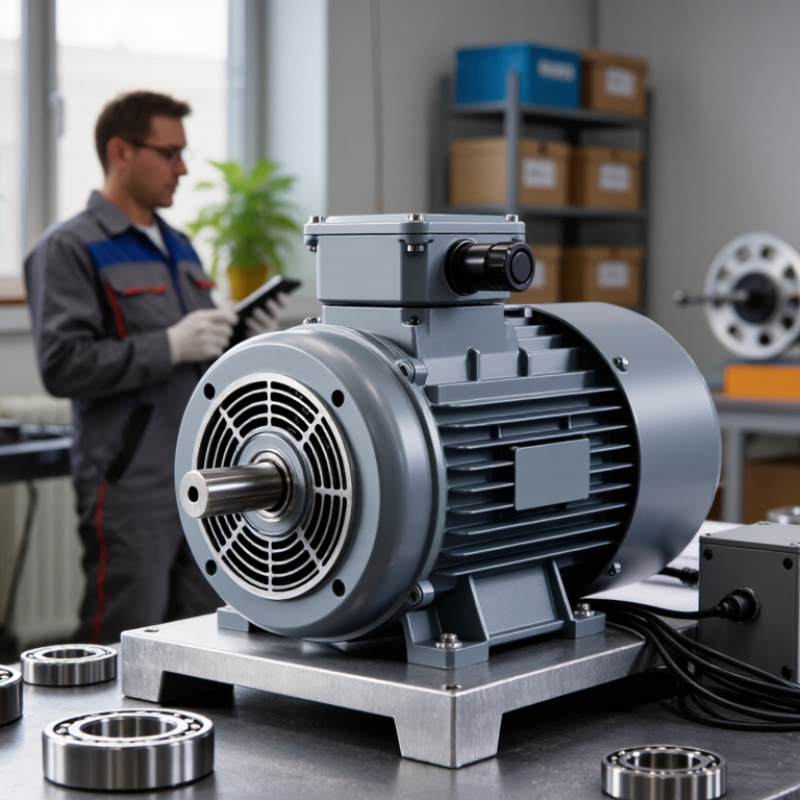
Choosing a heavy-duty motor starts with a clear definition of the application. Record the driven equipment, required torque, speed range, duty cycle, and starting frequency. A conveyor running continuously needs different protection from a crusher starting under a heavy load. Measure the actual load, not only the value shown on an old specification sheet.
Operating conditions also shape motor selection. Check ambient temperature, altitude, humidity, dust, vibration, and available voltage. A motor installed beside a furnace may require higher temperature tolerance. A dusty workshop may need a suitable enclosure and carefully planned cooling. Consider frequent starts, reversing, sudden load changes, and limited ventilation. These details affect service life, energy use, and maintenance intervals.
Tips: Create a one-page requirement sheet before contacting a supplier. Include rated power, voltage, frequency, speed, mounting method, shaft dimensions, enclosure needs, and control method. Ask for efficiency data, temperature-rise information, protection details, and test documentation. Confirm compatibility with the drive and the site’s electrical requirements. A common mistake is selecting power first and checking conditions later. That approach can work sometimes, but it leaves too much to assumption. When uncertain, monitor the existing machine’s current, temperature, and vibration during a normal shift. Real operating data is often more useful than guesswork.
| Requirement Dimension | Typical Data to Define | Recommended Heavy-Duty Selection Criteria | Why It Matters When Choosing a Supplier |
|---|---|---|---|
| Driven Equipment | Conveyor, crusher, pump, fan, compressor, hoist, mixer, or mill | Match the motor’s torque curve, starting capability, speed range, and mechanical interface to the driven machine. | Different loads require different starting torque, acceleration time, overload capacity, and shaft arrangements. |
| Rated Output Power | Usually specified in kW or horsepower; define continuous and peak demand separately. | Select a motor based on calculated shaft power plus an appropriate engineering margin, while avoiding excessive oversizing. | Accurate sizing reduces overheating, poor efficiency, nuisance trips, and unnecessary purchase and operating costs. |
| Rated Voltage and Frequency | Common industrial systems include 380–415 V, 50 Hz, or 440–480 V, 60 Hz. | Confirm line voltage, frequency, phase arrangement, voltage tolerance, and compatibility with the electrical control system. | A supplier should provide winding designs and nameplate data suitable for the actual power network. |
| Starting Method | Direct-on-line, star-delta, soft starter, or variable frequency drive | Check locked-rotor current, starting torque, acceleration time, and permissible voltage drop for the selected method. | Large motors can create high inrush current; correct starting coordination protects the motor and plant electrical system. |
| Operating Duty | Continuous, intermittent, cyclic, or frequent-start operation | For continuous industrial service, specify duty class S1; for frequent starts or varying loads, evaluate the complete duty cycle. | Duty classification affects thermal loading, insulation life, bearings, cooling requirements, and warranty suitability. |
| Load Characteristics | Constant torque, variable torque, high-inertia, impact, regenerative, or fluctuating load | Define minimum, normal, and maximum torque, load inertia, speed profile, and transient overload requirements. | Heavy-duty applications often fail when a motor is selected only by rated power without analyzing torque behavior. |
| Speed and Control Range | Rated speed, required operating speed, allowable speed range, and speed regulation | Choose the correct pole configuration and verify operation with a variable frequency drive when speed control is required. | Low-speed operation can reduce cooling performance and lubrication effectiveness unless the motor is designed for it. |
| Installation Environment | Indoor or outdoor location, dust, moisture, salt spray, chemicals, and altitude | Specify an enclosure such as TEFC or another suitable protected construction, together with appropriate ingress protection. | Environmental conditions determine enclosure durability, cooling performance, corrosion resistance, and service life. |
| Ambient Temperature | Normal ambient temperature, minimum temperature, maximum temperature, and daily variation | Standard motor ratings commonly use a 40°C maximum ambient reference; apply derating or special design above this value. | High ambient temperature reduces thermal margin and may require improved insulation, cooling, or a larger frame size. |
| Altitude | Installation elevation above sea level | At elevations above approximately 1,000 m, confirm thermal derating and cooling requirements with the supplier. | Lower air density reduces heat transfer and can limit the motor’s permissible continuous output. |
| Hazardous Area Classification | Presence of flammable gas, vapor, dust, or combustible fibers | Specify the required hazardous-area classification, gas or dust group, temperature class, and applicable certification. | Explosion-protected motor construction must match the actual site classification; a standard industrial motor is not interchangeable. |
| Protection and Cooling | Ingress protection, cooling arrangement, and external ventilation conditions | Use a protection level suitable for the site and verify that cooling air paths will remain unobstructed during operation. | Blocked airflow, conductive dust, or water ingress can cause rapid insulation deterioration and bearing damage. |
| Insulation System | Insulation class, temperature rise, surge protection, and drive compatibility | Class F insulation is widely used in industrial motors; verify temperature rise, voltage stress, and inverter-duty requirements. | Variable frequency drives can generate fast voltage pulses that require suitable winding insulation and cable practices. |
| Bearings and Lubrication | Rolling-element or sleeve bearings, bearing load, relubrication interval, and monitoring needs | Confirm bearing type, grease specification, regreasing access, shaft grounding for inverter operation, and vibration monitoring options. | Bearings are a major source of motor downtime, especially under high radial loads, misalignment, or inverter-induced currents. |
| Mechanical Interface | Frame size, mounting arrangement, shaft diameter, shaft extension, keyway, and terminal-box position | Verify dimensional drawings, mounting tolerances, coupling details, foundation requirements, and replacement compatibility. | Correct mechanical dimensions simplify installation and prevent alignment, coupling, and foundation modifications. |
| Noise and Vibration | Permitted vibration level, acoustic limit, balance grade, and foundation condition | Request factory test records and applicable vibration limits; use proper alignment and balancing for the complete drive train. | Excessive vibration shortens bearing life and can indicate imbalance, soft foot, misalignment, resonance, or foundation problems. |
| Efficiency Requirements | Required efficiency class, annual running hours, load factor, and electricity cost | Compare lifecycle cost rather than purchase price alone, particularly for motors operating many hours per year. | Higher efficiency can reduce energy consumption, operating temperature, and long-term ownership cost. |
| Testing and Documentation | Routine test reports, performance data, dimensional drawings, manuals, certificates, and spare-parts lists | Require traceable test documentation covering resistance, no-load performance, load performance, insulation, vibration, and noise as applicable. | Complete documentation supports acceptance testing, maintenance planning, compliance review, and future replacement. |
| Maintenance and Spare Parts | Expected service interval, critical spare parts, local technical support, and repair capability | Evaluate bearing availability, winding repair support, replacement lead time, service network, and technical response procedures. | Fast access to service and standard spare parts can significantly reduce production losses after a failure. |
| Supplier Evaluation | Relevant application experience, quality system, production capacity, delivery time, warranty, and after-sales support | Compare suppliers using the same technical specification, inspection plan, delivery terms, warranty conditions, and total lifecycle cost. | A suitable supplier should demonstrate consistent manufacturing quality and the ability to support the motor throughout its operating life. |
Record the driven equipment, actual torque, speed range, duty cycle, and starting frequency. Measure the real load. Old specification sheets may be inaccurate. Also note voltage, frequency, mounting method, shaft size, and control method.
Temperature, altitude, humidity, dust, vibration, and ventilation all influence motor performance. A motor near a furnace may need greater temperature tolerance. A dusty workshop may require a suitable enclosure and improved cooling. Frequent starts and sudden load changes also shorten service life.
Monitor current, temperature, and vibration during a normal work shift. These measurements reveal the actual operating load. They may differ from the design figures. Guesswork is convenient, but it can produce an unsuitable choice.
Compare rated power, voltage, frequency, speed, torque, and duty cycle. Review efficiency at full and partial load. Many machines spend long periods below rated output. Small details matter.
Check the enclosure, insulation class, cooling method, bearings, and allowable temperature rise. Ask for test records covering vibration and winding resistance. High-voltage insulation and efficiency data are also useful. Missing documents should make you pause.
Ask how the manufacturer controls stamping, rotor balancing, winding, machining, and assembly. Traceable serial numbers should connect each motor with its test record. Inspect production samples when possible. One polished sample proves little.
Confirm voltage, frequency, enclosure protection, insulation, shaft dimensions, cooling, and mounting requirements. Review drawings before production begins. Request a schedule, output range, component sources, and delivery history. Packaging photos and spare-part planning can prevent unpleasant surprises.
Confirm the warranty period, exclusions, inspection process, response time, and transport responsibilities. Technical support should cover installation, vibration checks, insulation testing, and fault diagnosis. Request a sample failure report and a named technical contact. A confident promise is not evidence.
Choosing the best Chinese Heavy Duty Motor supplier requires a structured evaluation of both technical performance and business reliability. Begin by defining the motor’s required power, torque, speed, duty cycle, load conditions, installation environment, and expected service life. Then compare specifications such as efficiency, insulation class, protection level, materials, thermal performance, and manufacturing capabilities. A suitable supplier should demonstrate consistent production processes, effective quality control, relevant certifications, inspection procedures, and reliable product performance under demanding operating conditions.
It is also important to assess the supplier’s ability to provide customized designs, stable production capacity, realistic delivery schedules, clear warranty terms, and responsive technical support. Beyond the initial purchase price, consider energy consumption, maintenance requirements, spare parts availability, transportation, and long-term operating costs. By evaluating these factors together, buyers can identify a dependable Chinese supplier that offers the right balance of performance, quality, service, and total value for their specific application.
