Zentec Motor Zentec Motor

2026 How to Choose the Best Brushless Gear Motor for Your Needs?

Time:2026-07-12 Author:Amelia
0%

Choosing the right Brushless Gear Motor can be a daunting task. With many options available, buyers often feel overwhelmed. Dr. Emily Carter, a leading expert in motor technology, emphasizes, "Selecting the right motor is crucial for optimal performance." Her words highlight the importance of understanding your specific needs.

Brushless Gear Motors are renowned for their efficiency and durability. However, they come in various shapes, sizes, and specifications. Each application demands a unique solution, and what works for one project may not suit another. It can be challenging to navigate the complexities of torque, speed, and control options.

Many users mistakenly underestimate the significance of precise requirements. Consider the environment where the motor will operate. What's the load condition? What are the space constraints? Addressing these questions can lead to better decisions. It’s not just about picking a motor; it’s about choosing one that guarantees reliability and performance.
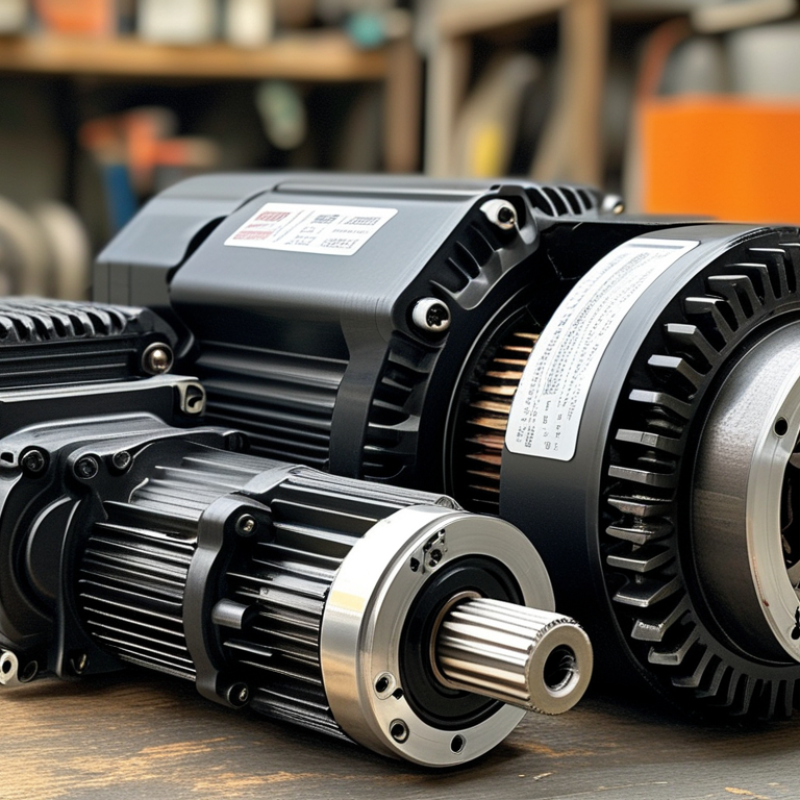
2026 How to Choose the Best Brushless Gear Motor for Your Needs?

Understanding Brushless Gear Motors: An Overview of Functionality

Brushless gear motors are integral in various applications where precision and efficiency are crucial. These motors utilize electronic commutation instead of brushes, resulting in higher efficiency and reduced maintenance. According to a report by the International Energy Agency, brushless motors can achieve energy savings of up to 30% compared to traditional brushed motors. This makes them ideal for robotics, electric vehicles, and automation systems.

Understanding the functionality of brushless gear motors requires attention to several key parameters. The torque rating and speed are critical indicators of performance. For instance, typical torque values can range from 0.1 Nm to over 10 Nm, depending on the application. Speed readings often fall within 100 to 5000 RPM. It's vital to analyze project requirements carefully. Overestimating needs can lead to overspending on more powerful motors than necessary.

Another aspect to consider is the compatibility with controllers and power sources. Many brushless gear motors require specific electronic controllers to operate effectively. Selecting inappropriate components can cause inefficiencies. For precise operations, manufacturers often recommend pairing motors with dedicated control systems to ensure optimal performance. It's essential to evaluate these factors to avoid redundancy and application mismatches.

Key Factors to Consider When Selecting a Brushless Gear Motor

Choosing the right brushless gear motor involves understanding your specific needs. Consider the torque and speed requirements of your application. The motor’s efficiency and heat management are crucial. Look for motors that can operate within desired temperature limits to prevent overheating.

When evaluating options, pay attention to the gear ratio. A higher ratio increases torque but decreases speed, while a lower ratio does the opposite. Ensure the gear motor’s dimensions fit your space constraints. Compact design is often essential for installation in smaller setups.

Tips: Test different configurations before finalizing. Small adjustments in gear ratios can significantly influence performance. Also, stay informed on new technologies as advancements emerge rapidly. Observing industry trends can enhance your decision-making process. Balancing cost with quality is necessary, but don’t overlook the importance of reliability in the long run.

Comparison of Key Factors for Selecting Brushless Gear Motors

Assessing Load Requirements: Torque, Speed, and Power Ratings

Choosing the right brushless gear motor requires careful consideration of load requirements. Torque, speed, and power ratings play critical roles in this selection. Understanding each specification helps ensure that the motor meets your operational needs. Torque determines the motor's ability to perform work. Too little torque can lead to underperformance. Too much torque can cause premature wear.

Speed is another vital factor. Brushless gear motors operate at various speeds. It is important to match the motor speed to your application’s demands. If the motor runs too fast, it may produce excess heat and reduce lifespan. Conversely, insufficient speed can hinder productivity and efficiency.

Power ratings give insight into motor capabilities. The power rating indicates how much energy the motor can handle. An inadequate power rating may lead to motor failure. This aspect must align with your project’s energy consumption demands. Adjustments might be necessary based on real-world experiences and specifications. Regularly re-evaluating your choices can lead to more informed decisions over time.

2026 How to Choose the Best Brushless Gear Motor for Your Needs? - Assessing Load Requirements: Torque, Speed, and Power Ratings

Application Torque (Nm) Speed (RPM) Power (W) Voltage (V)
Conveyor Systems 1.5 120 180 24
Robotics 2.0 80 160 36
Pumps 3.5 50 250 48
Electric Vehicles 4.0 300 2000 72
CNC Machines 2.5 1000 300 48

Evaluating Efficiency and Performance Specifications

When choosing a brushless gear motor, evaluating efficiency and performance specifications is critical. Efficiency ratings indicate how well a motor converts electricity into mechanical power. Look for motors with high efficiency, typically above 85%. Such motors minimize heat loss and energy consumption. According to industry data, a well-chosen motor can reduce energy costs by up to 30% over its lifecycle.


Performance specifications are equally important. Torque output, speed, and responsiveness define how a motor will function in real-world applications. For instance, high torque at low speeds is essential for applications like robotics and automation. The National Electrical Manufacturers Association (NEMA) suggests evaluating peak torque and continuous torque ratings. These ratings ensure the motor meets specific operational demands.


It's essential to balance efficiency and performance based on application needs. Sometimes, high efficiency might come at the cost of torque. This trade-off requires careful consideration. Testing different configurations can reveal unexpected performance issues. Gathering empirical data from real-world applications aids this process. It ensures that the selected motor aligns with operational goals and environmental standards.

The Importance of Size and Mounting Options in Motor Selection

Choosing the right brushless gear motor involves understanding both size and mounting options. The dimensions of your motor can significantly impact its performance. A compact motor may fit well in tight spaces, but it might struggle with power output. Conversely, a larger motor offers better torque but could be cumbersome in design.

Mounting options also play a crucial role in motor selection. Different setups may require specific mounting configurations. An improperly mounted motor can lead to vibration and reduced efficiency. Compatibility with your project's framework is essential. Consider distances and angles in your design.

Reflect on your requirements for space and application. What sizes are you considering? Have you assessed how the motor will perform under load? These questions help guide your decision. Motor selection is not just about specifications; it’s about finding the right fit for your unique project.

FAQS

: What factors should I consider when selecting a brushless gear motor?

: Focus on torque, speed, and power ratings to match your operational needs.

How does torque affect motor performance?

Too little torque leads to underperformance, while too much can cause early wear.

Why is speed important in brushless gear motors?

Matching motor speed to application needs prevents overheating and ensures efficiency.

What does the power rating indicate?

It shows how much energy the motor can manage. An inadequate rating risks failure.

How does motor size influence performance?

A compact motor fits tight spaces but may lack power, while larger motors offer more torque.

Why are mounting options crucial in motor selection?

Incorrect mounting can cause vibration and reduced efficiency. Compatibility matters.

What should I reflect on during motor selection?

Assess your space requirements and how the motor will perform under load.

How can I ensure my motor meets project demands?

Regularly re-evaluate specifications based on real-world experiences to make informed decisions.

What happens if I choose the wrong motor size?

An ill-fitting motor may compromise performance or complicate design.

What are common mistakes in motor selection?

Overlooking torque and speed requirements can lead to disappointing outcomes.

Conclusion

Choosing the best brushless gear motor for your specific needs requires a clear understanding of how these motors function. Brushless gear motors are known for their efficiency and reliability, making them ideal for various applications. When selecting a motor, it's crucial to consider key factors such as load requirements, including torque, speed, and power ratings, to ensure optimal performance.

Furthermore, evaluating the efficiency and performance specifications plays a significant role in determining the right motor. Size and mounting options should not be overlooked, as they can greatly influence the installation and overall effectiveness of the brushless gear motor in your project. By carefully assessing these elements, you can make an informed decision that best suits your operational needs.

Amelia

Amelia

Amelia is a seasoned marketing professional with a wealth of expertise in our company’s core offerings. With an unwavering passion for driving growth and innovation, she plays a pivotal role in shaping our marketing strategies and enhancing brand visibility. A key aspect of her responsibilities......